

Configuration of the tracking consent categories
Bloomreach supports a standalone tracking consent feature to help you comply with regulations requiring explicit consent before accessing data on a user's device. This requirement follows a May 2022 ruling by the Federal Court of Justice in Germany (Bundesgerichtshof – BGH) under the EU GDPR, which extended explicit consent requirements to pseudonymized tracking across email, SMS, push notifications, and website cookies.
ImportantThis article is for informational purposes only. Contact your Legal team for advice on your specific situation.
When enabled, the feature applies tracking consent to in-app messages and the following scenario action nodes:
- Browser push
- Mobile push
- MMS
- SMS
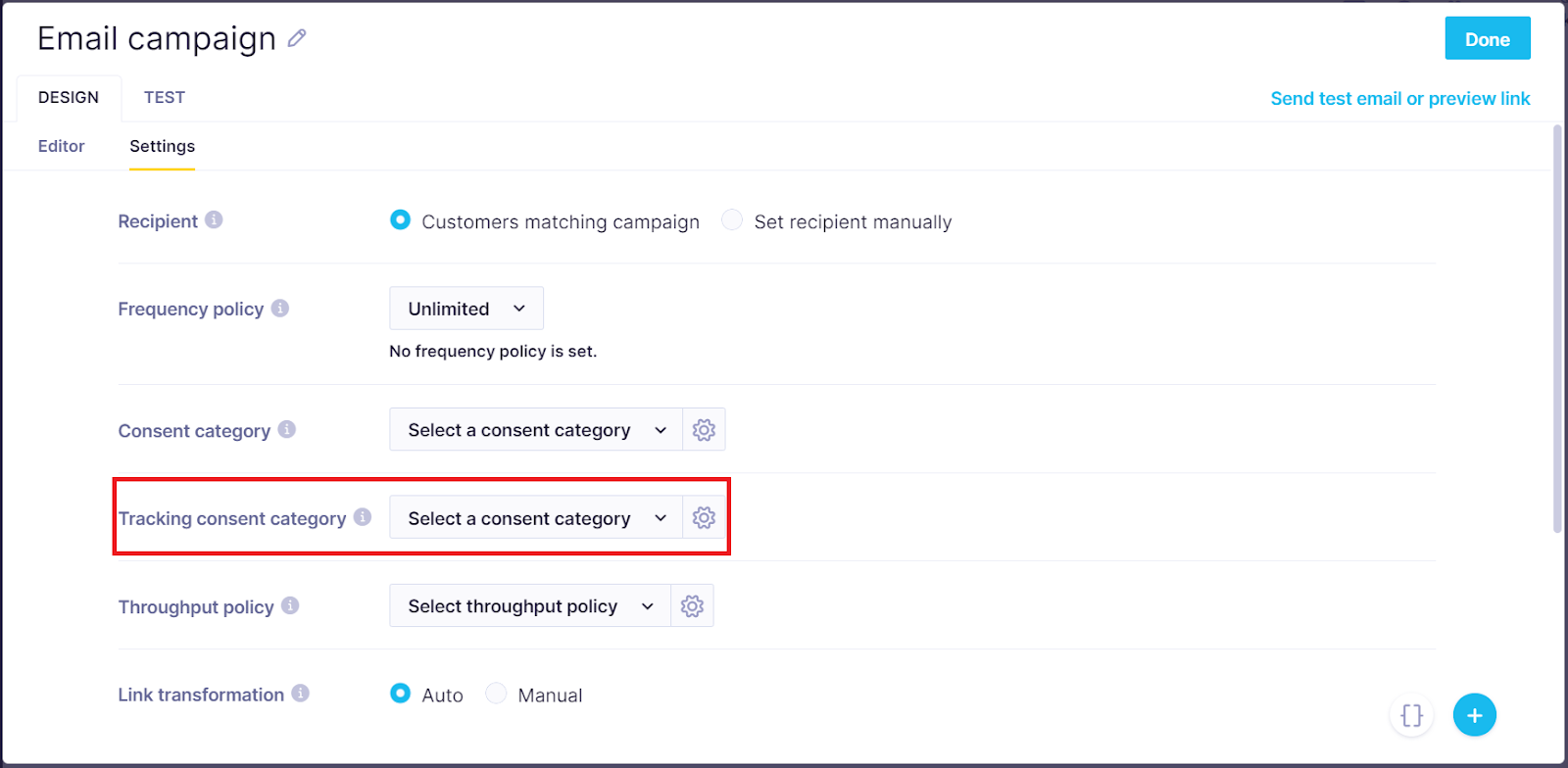
Affected events and statuses
When tracking consent is enabled and configured, the following statuses are only tracked with prior explicit consent:
| Action type | Status |
|---|---|
| Browser notification | delivered, clicked, closed |
| clicked, opened | |
| In-app message | all statuses |
| Mobile notification | delivered, clicked |
| SMS/MMS | clicked |
| Transactional email | clicked, opened |
Campaigns without configured tracking consent continue to process tracking as usual.
Each affected event includes a consent_category_tracking attribute that records which tracking consent category was used.
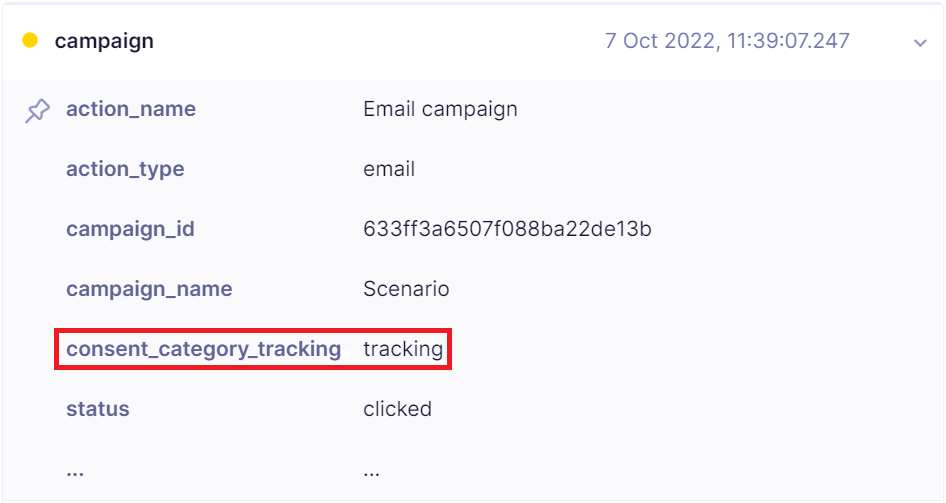
NoteIf you don't want to track
openedandclickedstatuses for a campaign (for example, an email campaign), select a tracking consent category in your campaign settings. Without this setting, those statuses are tracked as usual.
Prerequisites
Before enabling this feature, you need to collect prior explicit consent for tracking. Contact your Customer Success Manager to set up the consent collection use case.
ImportantEnabling this feature affects open rates and click-through rates in the email evaluation dashboard. Contact your Customer Success Manager to set up a custom evaluation dashboard that reflects prior explicit consent for tracking.
Force click tracking
In some cases, you may need to track a click before consent can be collected—for example, in a double opt-in flow. Use the xnpe_force_track URL query parameter to force click tracking for a specific link.
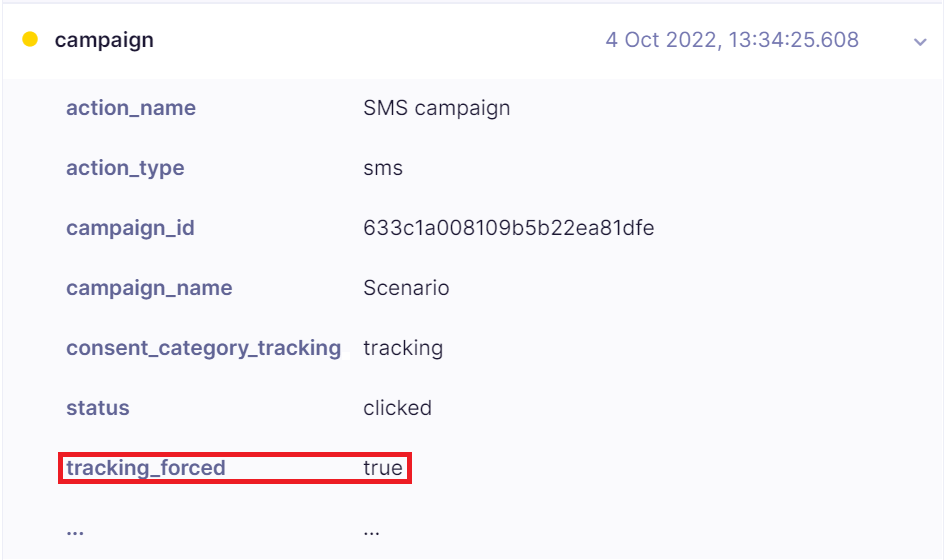
When this parameter is present, tracking consent is ignored and a clicked event is recorded with an additional tracking_forced attribute.
The parameter must be lowercase. The following values are evaluated as true:
https://example.com/?xnpe_force_trackhttps://example.com/?xnpe_force_track=truehttps://example.com/?xnpe_force_track=1
SMS campaign setup
In the SMS campaign editor, add the xnpe_force_track query parameter to the link in your message body. For example: https://example.com/confirm?xnpe_force_track=true. This is typically the confirmation link in a double opt-in flow.
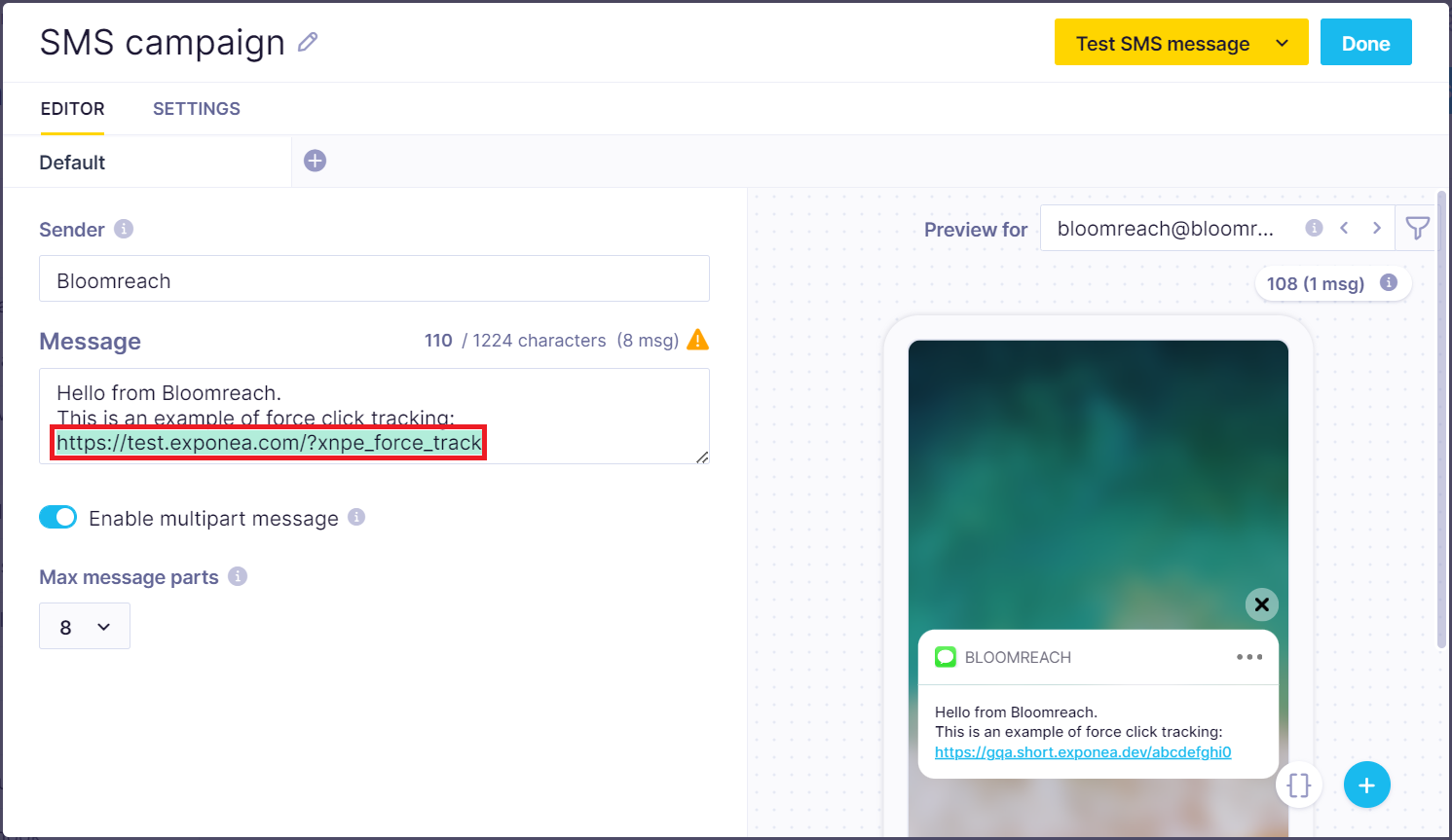
SMS campaign setup
In the campaign settings, you can configure tracking behavior at the campaign level. When xnpe_force_track is used on a specific link, it overrides the campaign-level tracking consent setting for that link only.
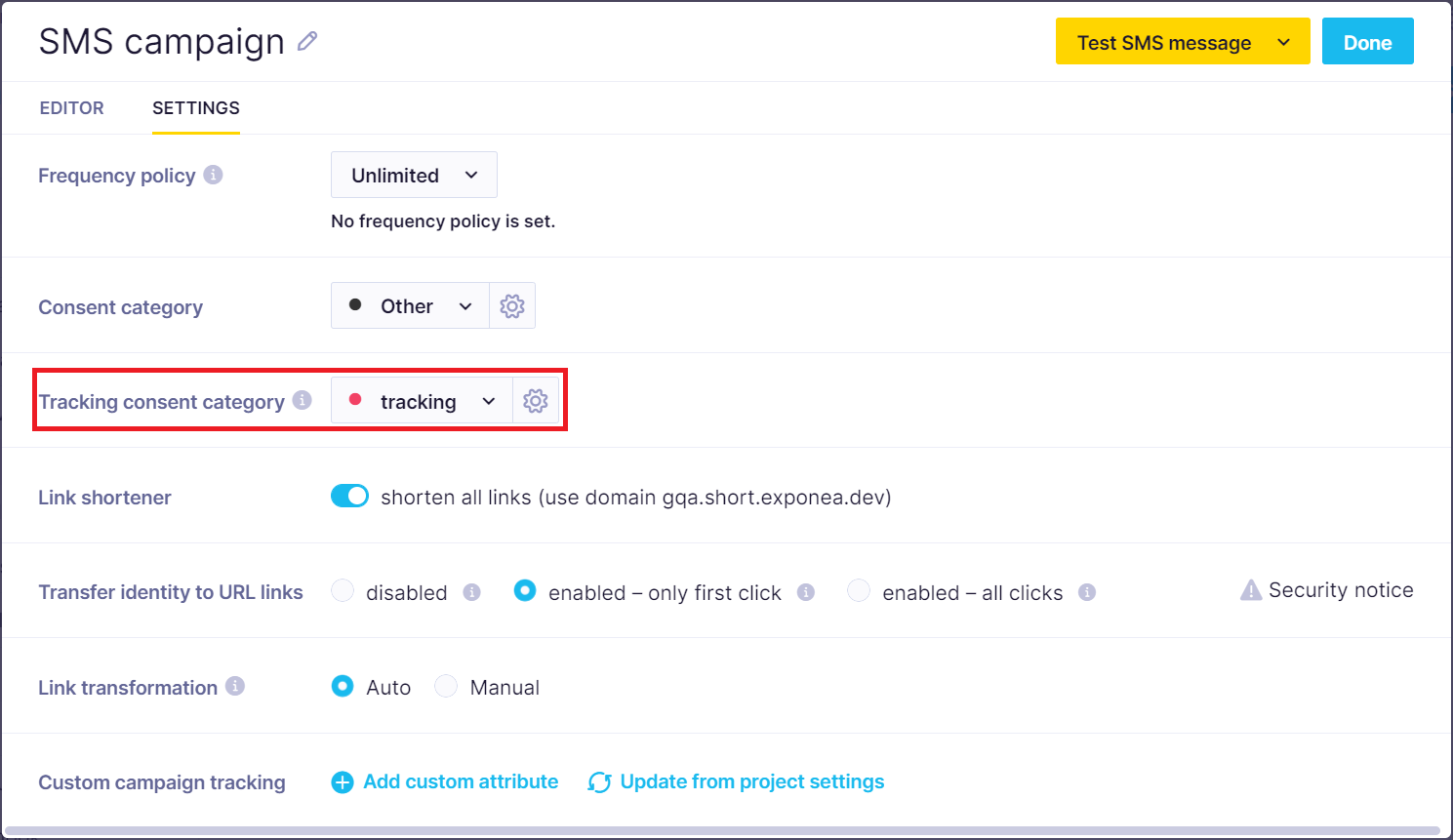
Consent setup of customer
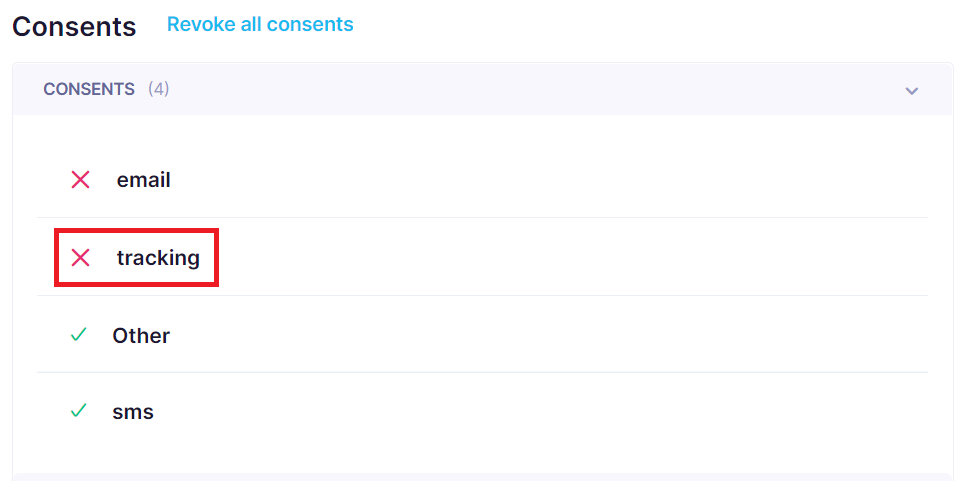
In the customer profile, consent categories are listed with their current status. A customer without tracking consent configured will show no active tracking consent category—this is the scenario where force click tracking would apply, allowing the click to be recorded before consent is collected.
Clicked campaign event
In the event log, a forced click appears as a standard campaign event with action_type: sms and status: clicked. It includes an additional tracking_forced: true attribute, distinguishing it from clicks tracked under normal consent rules.
Transactional emails
The Transactional Email API includes two optional parameters in the settings object:
consent_categoryconsent_category_tracking
These parameters override the default API behavior and apply tracking consent category rules to transactional emails.
NoteThe tracking consent feature is disabled by default. To enable it for your project, contact your Customer Success Manager.
Updated 2 months ago