

Loomi Analytics
This is a Premium tier feature powered by Loomi.
This guide introduces you to Loomi Analytics.
What is Loomi Analytics
Loomi Analytics lets you generate analyses (reports, funnels, trends, segmentations) and definitions (metrics, aggregates, running aggregates, and expressions) by asking questions or sending requests in natural language. It also provides explanations for the definitions it generates.
Loomi Analytics helps you create analyses and get insights from your data without building definitions manually.
How to use Loomi Analytics
Launch Loomi Analytics
Open Loomi Analytics by clicking the Star icon in the top right corner.
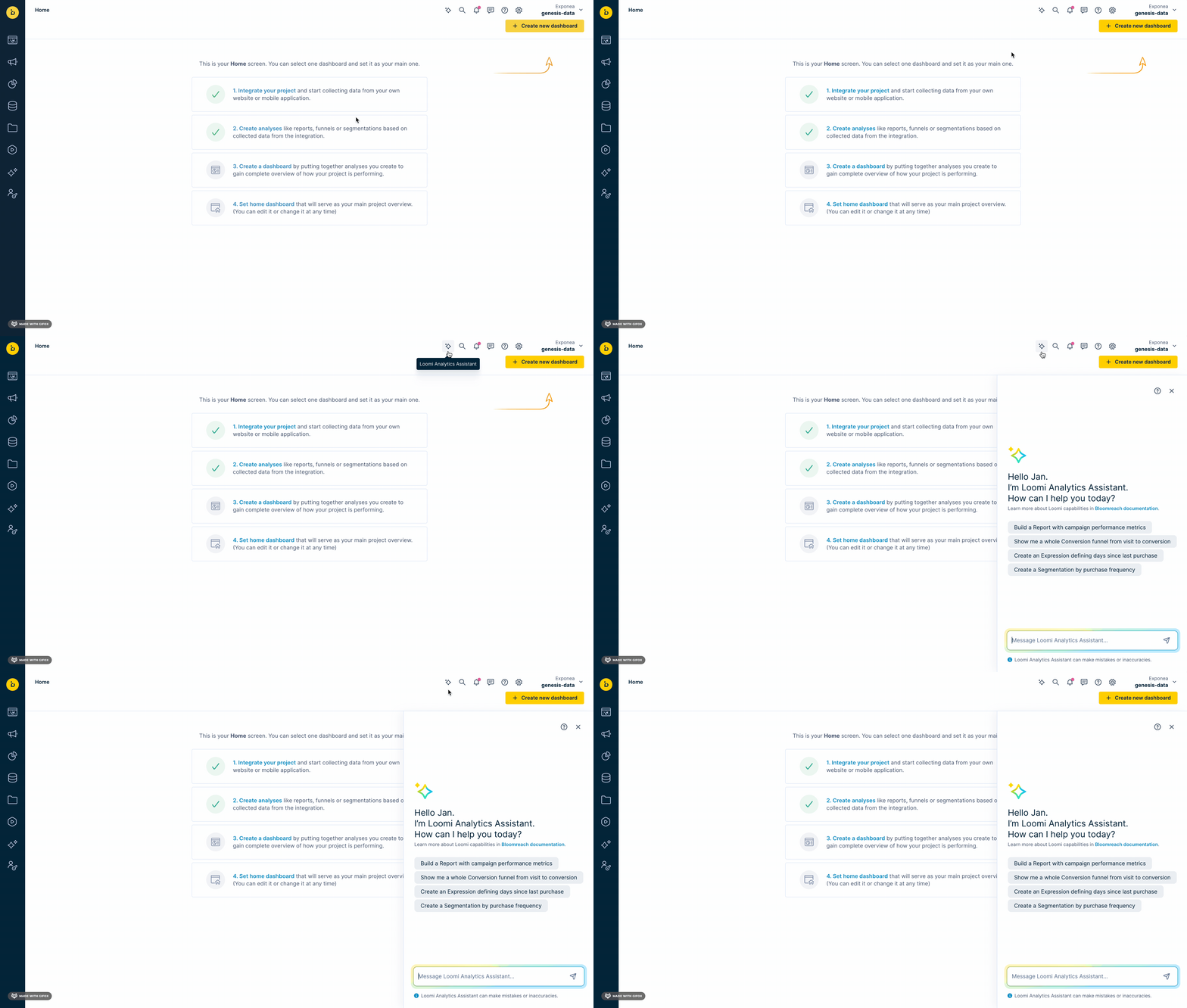
Loomi Analytics panel in the top navigation bar
Enter a request
Enter your request in the text field, or click to choose from a pre-defined prompt.
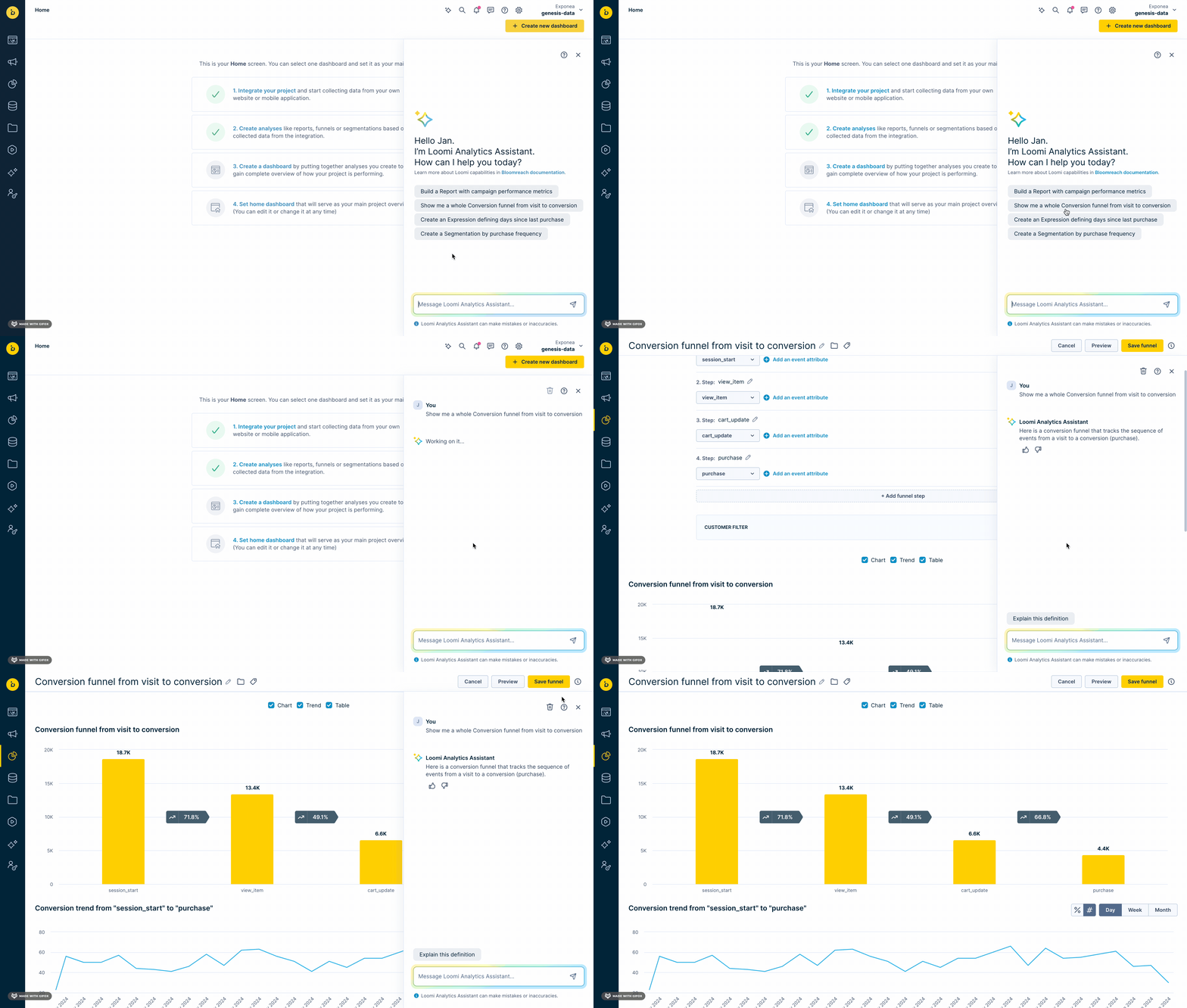
Pre-defined prompt options in the Loomi Analytics panel
Send the request
Click Send or press Enter to send a request.
Check the results
Verify the results once your analysis or definition is complete to confirm data accuracy.
Edit an existing analysis
Open any existing report, segmentation, running aggregate, or funnel and ask Loomi to modify it directly. For example:
- "Update the date range to last 90 days."
- "Add a filter for customers in Germany."
- "Adjust all the dates in this report to cover Q2."
Loomi reads the existing definition and edits it in place.
Let Loomi Analytics explain
After creating an analysis, click Explain this definition. Loomi explains the definition — not the results.
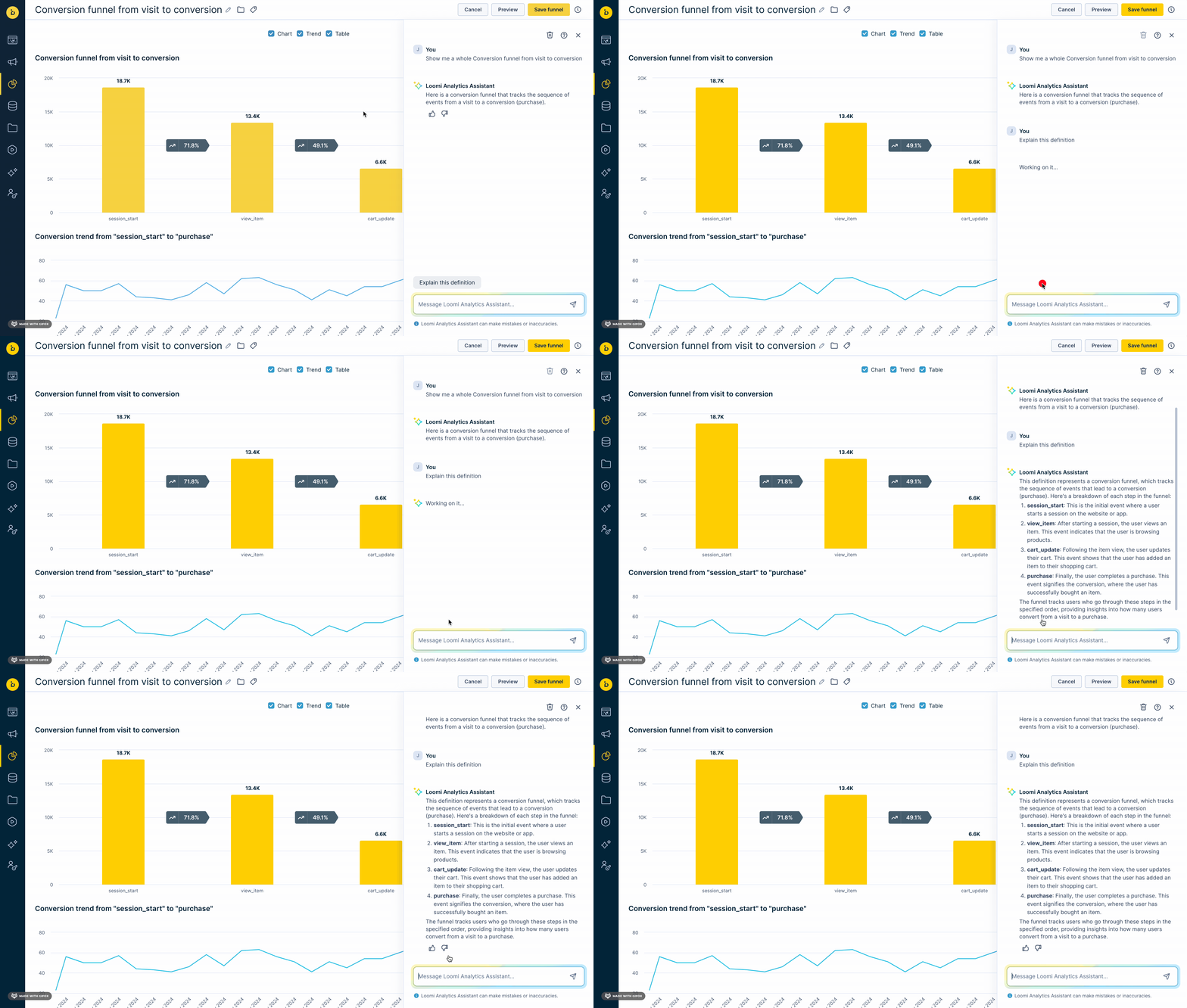
The "Explain this definition" option in the Loomi Analytics results view
Provide feedback
Evaluate each response by clicking the Thumbs Up (positive) or Thumbs Down (negative) icon. Specify what was good or what could be improved. Your feedback feeds directly into the continuous improvement loop.
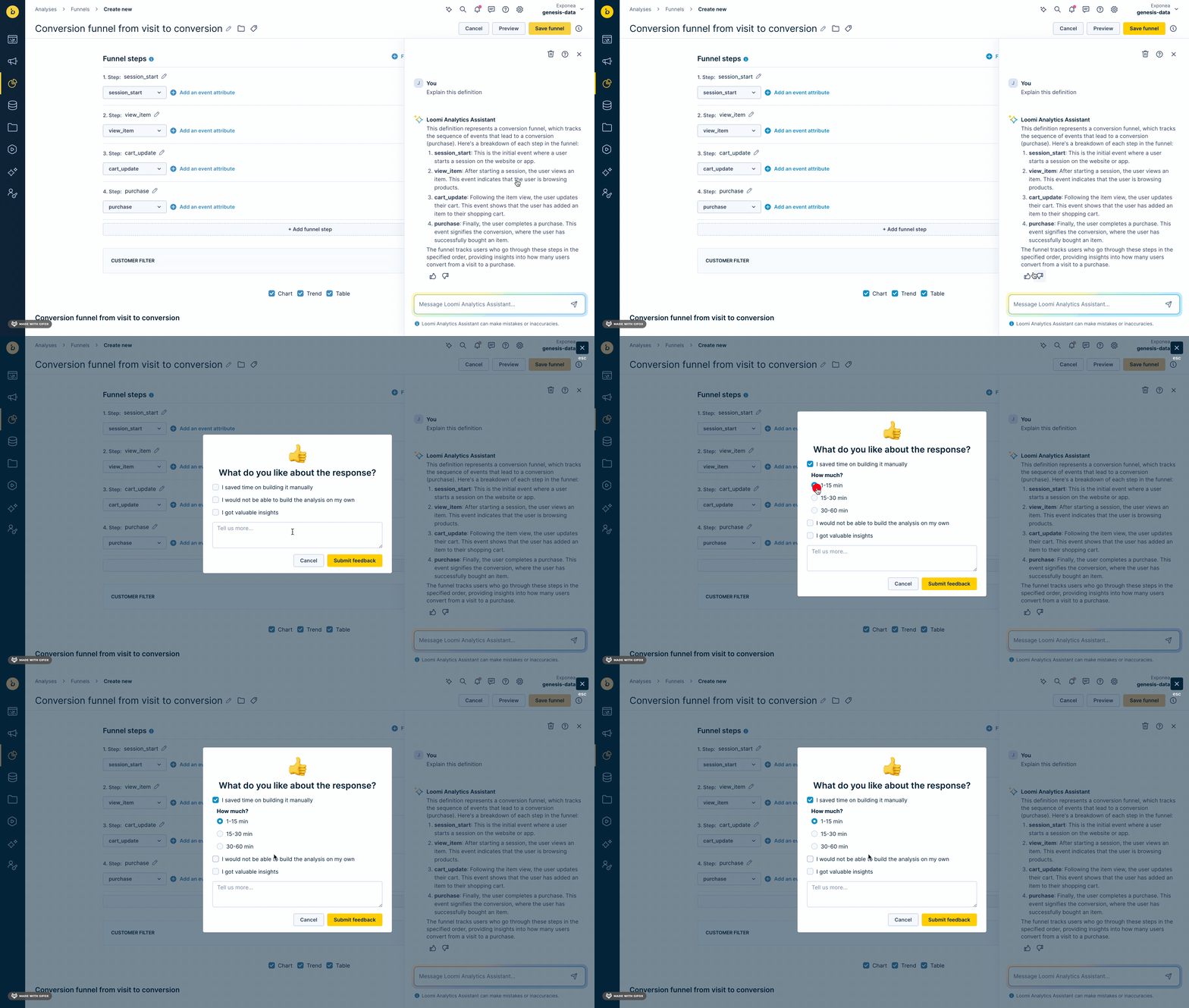
Feedback icons in Loomi Analytics
Use case examples
- Build reports: "Show me email campaign evaluation with metrics -
sent,delivered,opened,clicked,open rate, andclick rateall in last 30 days drilled down by country." - Build trends: "Show me the trend of
session_startevents in the last 7 days." - Build metrics: "Create a metric defining active users in the last 7 days."
- Build segmentations: "Create a segmentation based on the number of purchases."
- Build aggregates: "Create an aggregate defining total spend."
- Build expressions: "Create an expression defining the time between purchase and the last clicked campaign."
- Build event segmentations: "Create an event segmentation to categorize website visits based on the device used — for example, segment the
session_startevent intomobile,desktop, andtabletcategories." - Edit an existing report: "Adjust all the dates in this report to cover Q2."
- Refine an existing segment: "Add a filter for customers who purchased in the last 30 days."
- Event-based metrics: "How many checkouts happened last week?" — Loomi Analytics counts checkout events, not the customers who triggered them.
- Running aggregates: "Show me a rolling 30-day order count." — Loomi Analytics applies the including or excluding setting on the rolling window.
Limitations
- There is a length limit per conversation, based on the number of characters. When the limit is reached, an error occurs.
- In-place editing covers reports, segmentations, running aggregates, and funnels. Coverage for additional analysis types is rolling out; for any type where in-place editing is not yet available, Loomi Analytics continues to create a new analysis.
- Loomi Analytics can't build Flows.
- Loomi Analytics can't build Geo Analysis.
- Loomi Analytics can't build Retention.
- Loomi Analytics is an AI system — occasional mistakes still happen. New failure modes surfaced by customers and consultants feed the same improvement loop, so feedback continues to matter.
Data protection and privacy
Loomi Analytics prioritizes data privacy and security. It doesn't collect, process, or store any personally identifiable information (PII). The system interacts solely with anonymized data related to the data schema — including customer attributes, event types, and event attributes — without tracking any values for these attributes.
Data privacy
- Works with project data: Loomi Analytics understands your data schema (customer properties and event attribute names) and examples of the tracked value of each property or attribute needed for building an analysis.
- No PII handling: Loomi Analytics doesn't handle PII. Loomi never accesses properties marked as PII in Data Manager.
- No training: No project data (schema or data examples) is used for model training.
- Data handling: All existing data handling, permissions, and privacy controls apply to Loomi interactions. Customer data is not stored or processed differently.
Prompting
- No saved prompts: Loomi Analytics doesn't store any prompts written by users. It uses prompts only to maintain the context of the conversation. Prompts are discarded when users start a new conversation or manually clear the context.
- No background processes: Loomi Analytics doesn't work autonomously. Every interaction is triggered by a user — if no request is sent, no actions are taken in the background.
NotePrompts are stored for internal purposes only. This storage helps understand the context of feedback and feed the continuous improvement loop.
Compliance
- GDPR compliant: Loomi Analytics is reviewed within the privacy-by-design process and complies with the General Data Protection Regulation (GDPR) and other applicable data protection regulations.
- Regular audits: Regular tests and development ensure continuous compliance with regulations.
Transparency
- Comprehensive documentation: This documentation provides detailed insights into data handling practices.
- User communication: Users are notified in advance of any significant changes to the feature, especially those that affect data privacy and security. Consent is always required before using the feature.
- Feedback mechanism: Raise concerns or provide feedback through Bloomreach support.
Updated 2 months ago