

Data mapping
This guide explains how to connect your custom naming conventions to Bloomreach’s predefined formats via data mapping.
What is Data mapping
Data mapping connects your custom naming conventions to Bloomreach's predefined formats. This lets you keep your existing event names, customer properties, and catalog structure while ensuring Bloomreach features work seamlessly.
Data mapping use cases
Use data mapping to:
- Deploy use cases without restructuring your data.
- Clone content between projects while retaining custom naming.
- Power recommendation and prediction engines.
- Set up predictive campaigns faster.
Events
This section lets you map your custom events to the predefined events in Bloomreach. After selecting a specific event, you can further refine the event attributes.
Supported events include:
PurchasePurchase itemAdd to cartRemove from cartView itemView categoryReturn itemSearchAdd to wishlistRemove from wishlist
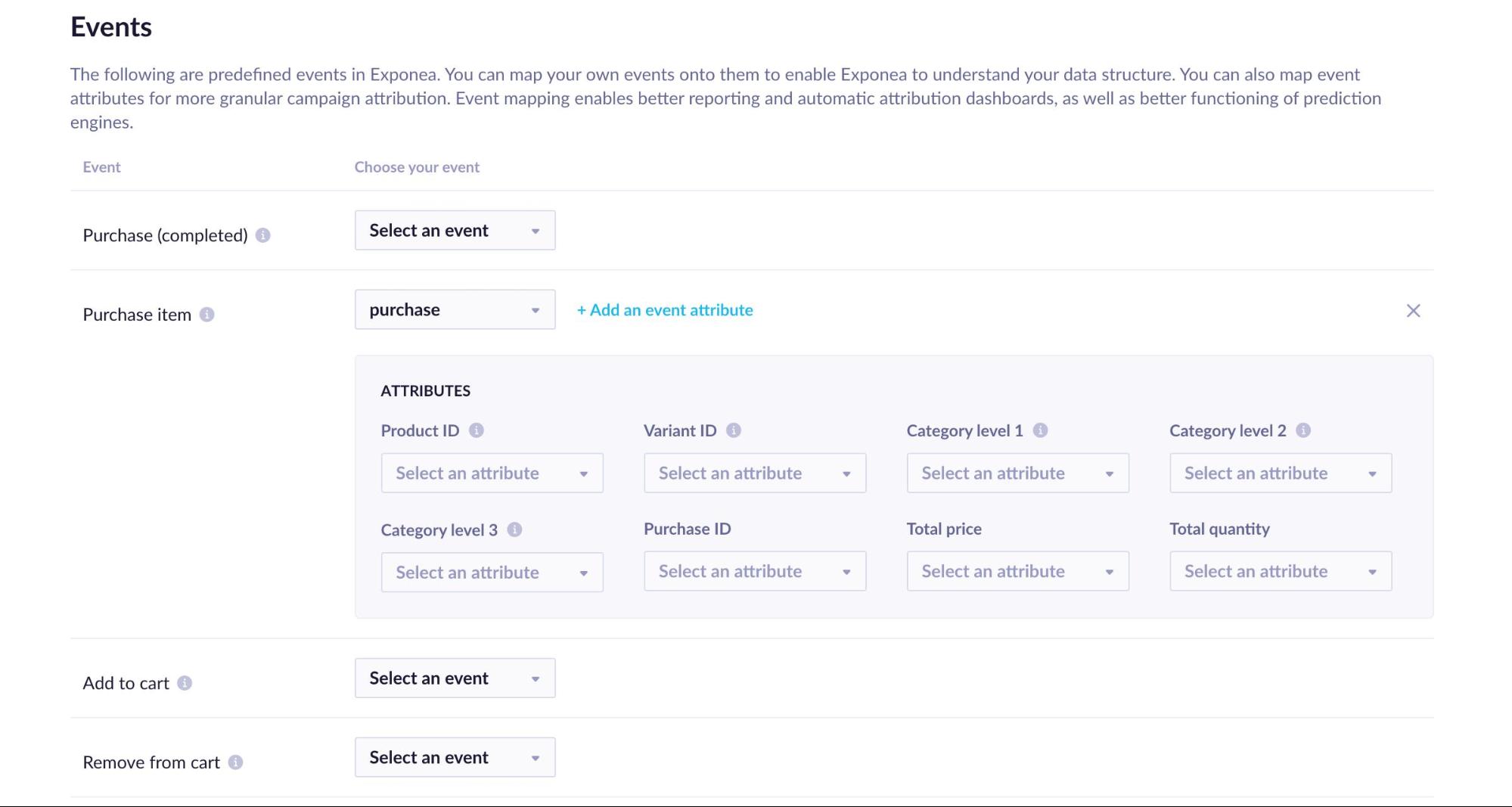
Permissioned access to campaign event settingsCampaign settings require permission access. Discuss any mapping changes with your Account Manager before making them.
Customer properties
Map specific customer properties to Bloomreach's predefined format. For example: first_name or last_name.
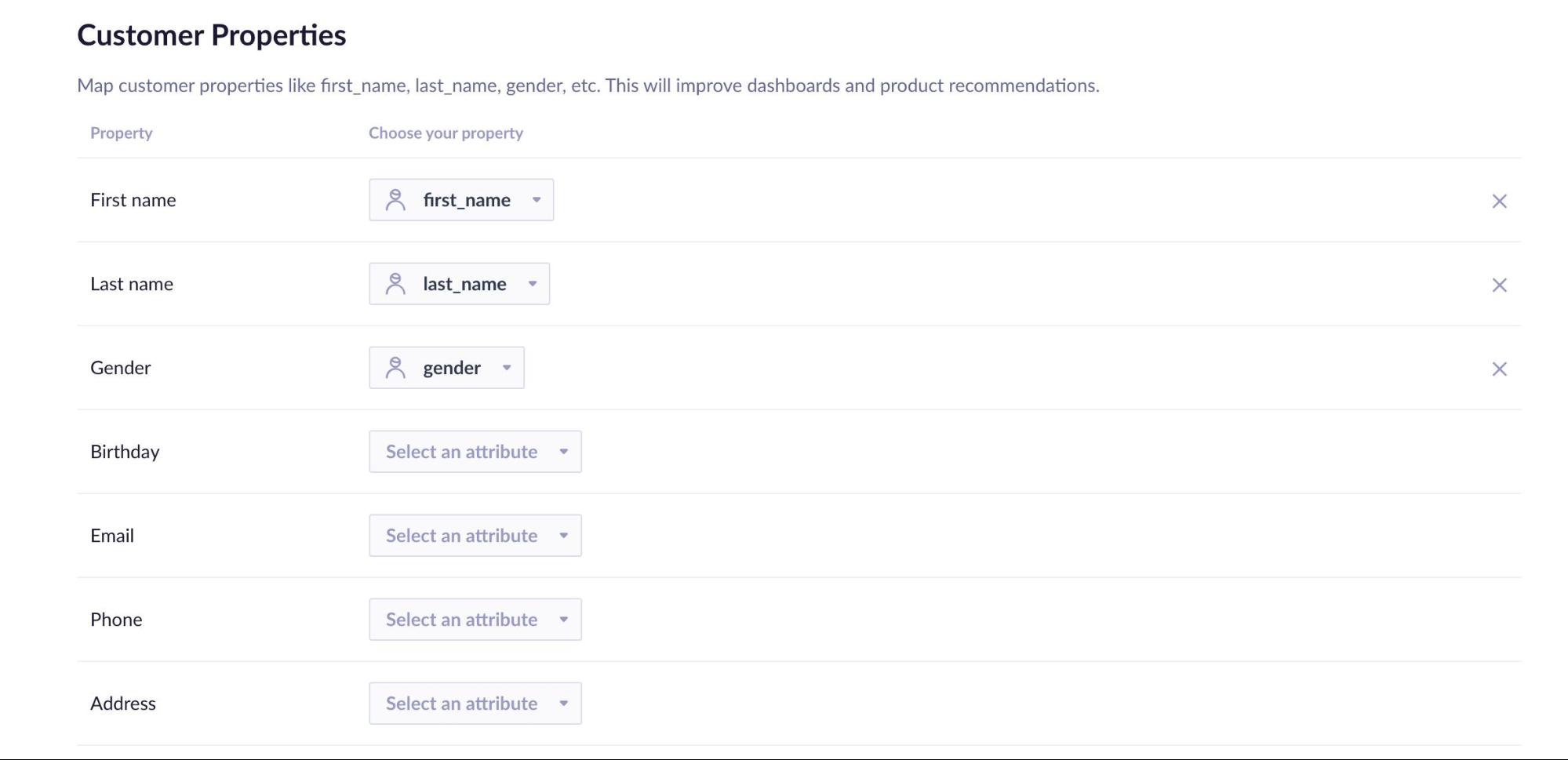
Email mapping
Email mapping doesn't affect campaign functionality. Email campaigns always use the email property as the recipient (unless a custom recipient is configured), regardless of mapping.
Catalogs
The Catalogs section lets you map your product catalog structure to Bloomreach's predefined format. This includes selecting your main catalog and mapping reserved fields so that features like recommendations, use cases, and templates work correctly.
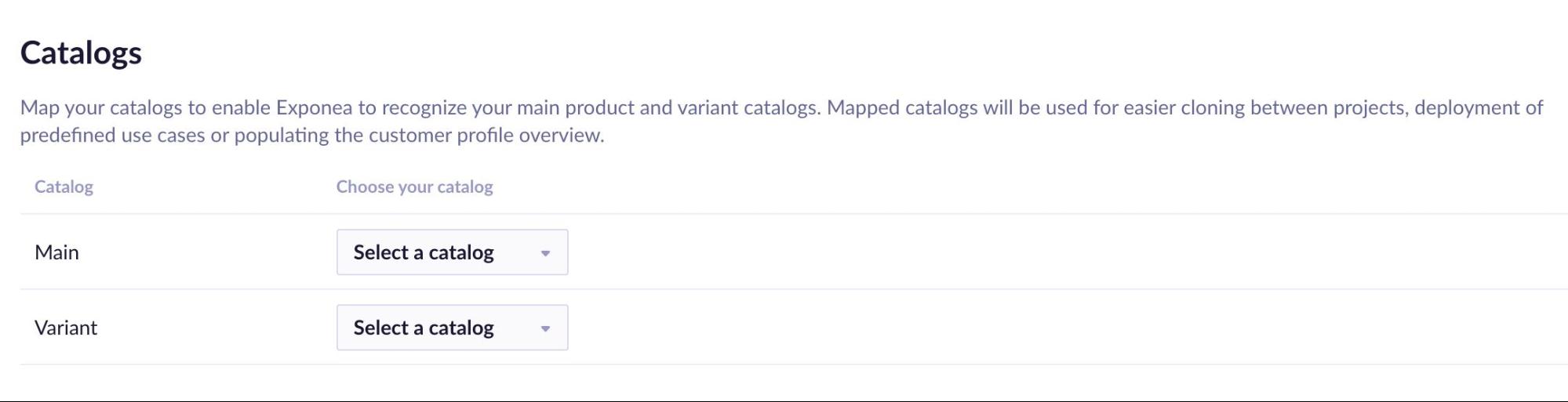
Main catalog
Each project uses one catalog as its primary product catalog. This catalog represents your complete set of sellable products.
Go to Data & Assets > Data Manager > Mapping > Catalogs and choose the catalog that represents your complete set of sellable products. Typically, this is your variant catalog.
If your project has multiple catalogs, you select the catalog a given recommendation or template uses during recommendation setup or catalog lookups. The main catalog selection also determines which catalog the Use Case Center defaults to.
Configure catalog attributes
How you configure catalogs depends on whether you have Data hub integration.
Non-data hub integrations
- Go to Data & Assets > Data manager > Mapping > Catalogs.
- Map relevant fields to Bloomreach’s reserved attributes.
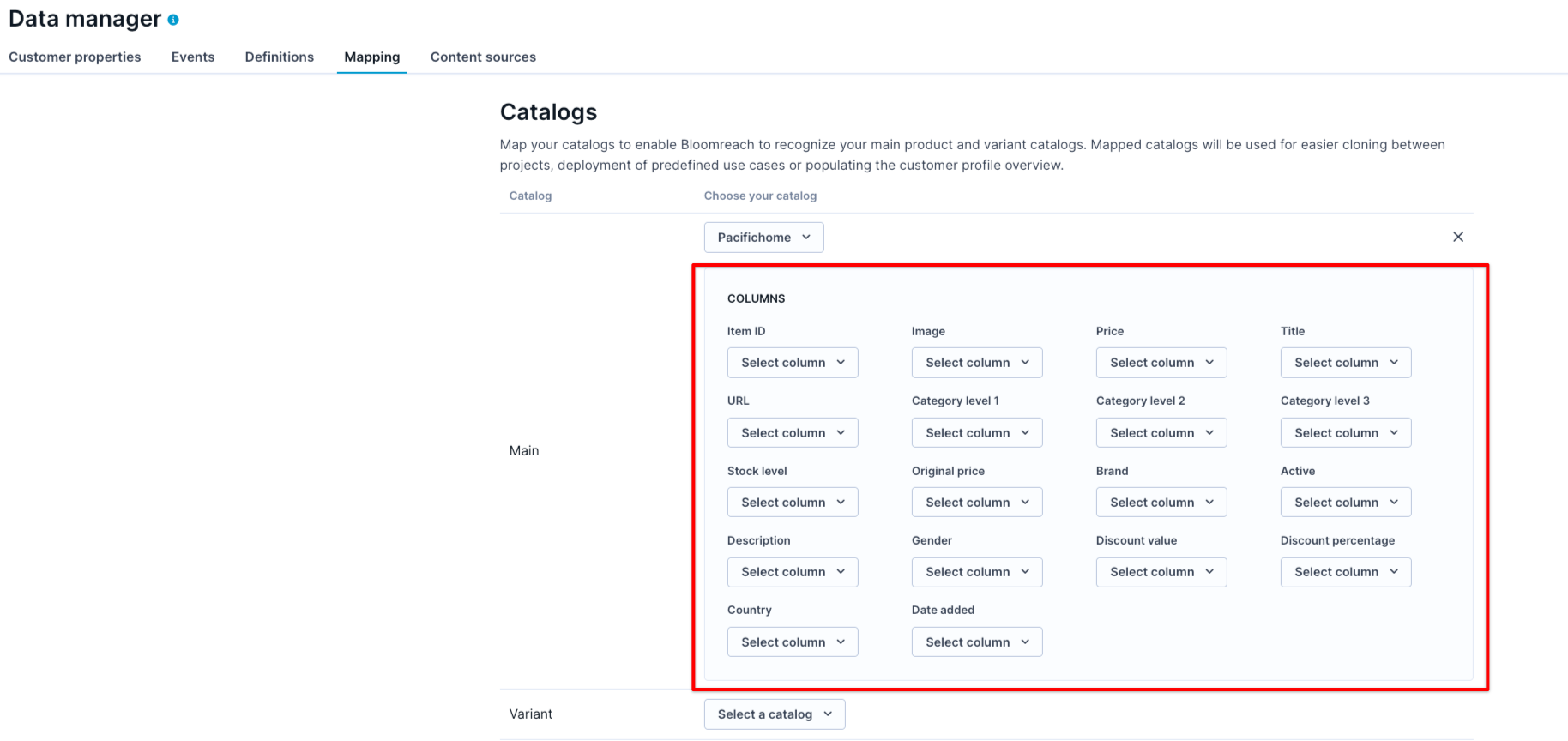
Review the article on creating legacy catalogs.
Data hub integrations
The effective main product catalog is the item collection configured as the product catalog destination for your project. Schema mapping in Data hub, including system attributes, is the source of truth for reserved fields.
- In Data hub, go to the Schema tab of your item collection.
- Configure the system attributes.
Review the article on creating and managing Data hub catalogs.
Updated 2 months ago